These are all quickies.
I bought some books:
Alan Dugan Poems Seven: New and Complete Poems
(Haesong let me borrow this for a while but I just bought a used copy on Abe.)
Jack Spicer My Vocabulary Did This to Me
Ben Mirov Ghost Machine
Lucas Farrell Birds Any Damn Kind
II.
My friend Karen's mom got me Carta Blanca from just across the border. I drank three last night I drank them while I talked to my friend Jason Frisbie. I got kind of buzzed, it's all 3.2 beer in Oklahoma, and I talked about Dugan--like how I like him and how he is a middle-class Bukowski, someone much more relate-able to the young male rust-belt mind set. Dugan went to college, not great colleges, and worked office jobs I think. At least the work points to that. Some of his poems are about ad agencies, but he is the Peggy, not the Don Draper.
III.
I also watched Army of Shadows (1969), which was the saddest film I think I have ever seen. It is amazing.
Thursday, December 2, 2010

Friday, November 12, 2010
Man...
I only ever talked to C.D. Wright once and she warned me that the worst thing that will happen to me is that I will imitate myself. That seems to be happening right now.
Like, I am trying to use Takashi Shimura in a poem. Or the feeling of being Takashi Shimura (he is in the blog pic). I don't know how to write those eyes.
Dang.
Like, I am trying to use Takashi Shimura in a poem. Or the feeling of being Takashi Shimura (he is in the blog pic). I don't know how to write those eyes.
Dang.
Sunday, October 24, 2010
Thinly veiled marketing; movies with dick jokes; White Male Heterosexual Poetics
I.
I've never lived on the coasts or went to a liberal arts college and I've never lived in a "college town" until now, and I have picked a hell of a place. Stillwater is okay, but I don't travel around it much. People outrage over two Wal-Marts and Chili's and that stuff and that all sucks, but I don't know, the weather bothers me most. 82 during the day and then 40ish at night. There's no middle ground. It overcasted yesterday and stuck around the high-60s, which was nice, and Nebraska-OSU meant the town was easy to navigate. I don't like using the word "happy"--who knows what that means, but I do like driving around on Saturday/Sunday afternoons in the fall. South and East KC provided that opportunity pretty regularly. Stillwater doesn't: the town is small and everybody is out, so it's kind of miserable trying to get downtown or on Perkins--the big strip of Wal-Marts and Chili's. Everybody's out and having a good time and I hate it.
Best thing about football games, though: the town dies. I drove to a coffee shop and met with Haesong and Andrew Terhune and we talked about the first year exam and conducted a "team-building exercise" by watching Jackass 3D. Sometimes, people take movies too seriously but not seriously enough. Jackass 3D was pretty good--I look forward to True Grit and Tron Legacy.
II.
I think white male heterosexual American poets should stop writing about jazz, one thing, and another thing: we should not try to write about our vacations to third world countries; we confuse sympathy and empathy for the locals. I think the one thing a white male heterosexual American poet can take on in a political sense, and not sound like a retard or a colonial, is in the context of class. That's the one grief a white male heterosexual American poet can experience first-hand that doesn't involve relationship heartbreak.
III.
I am reading with Justin Runge on November 5th as part of An Actual Kansas.
This all I have right now.
I've never lived on the coasts or went to a liberal arts college and I've never lived in a "college town" until now, and I have picked a hell of a place. Stillwater is okay, but I don't travel around it much. People outrage over two Wal-Marts and Chili's and that stuff and that all sucks, but I don't know, the weather bothers me most. 82 during the day and then 40ish at night. There's no middle ground. It overcasted yesterday and stuck around the high-60s, which was nice, and Nebraska-OSU meant the town was easy to navigate. I don't like using the word "happy"--who knows what that means, but I do like driving around on Saturday/Sunday afternoons in the fall. South and East KC provided that opportunity pretty regularly. Stillwater doesn't: the town is small and everybody is out, so it's kind of miserable trying to get downtown or on Perkins--the big strip of Wal-Marts and Chili's. Everybody's out and having a good time and I hate it.
Best thing about football games, though: the town dies. I drove to a coffee shop and met with Haesong and Andrew Terhune and we talked about the first year exam and conducted a "team-building exercise" by watching Jackass 3D. Sometimes, people take movies too seriously but not seriously enough. Jackass 3D was pretty good--I look forward to True Grit and Tron Legacy.
II.
I think white male heterosexual American poets should stop writing about jazz, one thing, and another thing: we should not try to write about our vacations to third world countries; we confuse sympathy and empathy for the locals. I think the one thing a white male heterosexual American poet can take on in a political sense, and not sound like a retard or a colonial, is in the context of class. That's the one grief a white male heterosexual American poet can experience first-hand that doesn't involve relationship heartbreak.
III.
I am reading with Justin Runge on November 5th as part of An Actual Kansas.
This all I have right now.
Sunday, October 10, 2010
MARKET SYNERGY
PANK Magazine asked me some questions.
Jellyfish 3.0 is up with two prose poems.
My friend suggested I try anacoluthon. I always thought my work is inherently messy/strange. I don't know if I can get away with that.
Jellyfish 3.0 is up with two prose poems.
My friend suggested I try anacoluthon. I always thought my work is inherently messy/strange. I don't know if I can get away with that.
Tuesday, September 28, 2010
Lifted Brow Online
Ronnie Scott, editor of Lifted Brow has started posting short-shorts on the mag's website. The first of two short-shorts/prose poems is up right now.
A student told me about a week ago she liked Twilight a lot. I said that's fine.
A student told me about a week ago she liked Twilight a lot. I said that's fine.
Thursday, September 23, 2010
Poetics? Blah
I.
Stephen Colbert talked to Guillermo Del Toro about the monsters in the latter's films last night. Particularly, the variety in Hellboy--how the monsters, all together, look wildly different yet consistent in terms of "Del Toro's artistic influence." That, intuitively, Del Toro designed the various vampires and monsters with cities growing from their faces, and that he put them all in the same space, created consistency. I found that interesting because I like the second Hellboy and Cronos for intuitive reasons: nothing looked like it existed in this world, but still sort of did. That it all exists in Del Toro's head, and that he places all these "inconsistent" images together, creates the consistency.
II.
That got me thinking about Mary Jo Bang's Bride of E. I tried to read it in the Spring, to review it for New Letters, but I got sidetracked. At the time, I found the book not so much boring but almost too much in terms of high and low culture slammed together. I re-read it for workshop on Tuesday and I think I "get it" now and I think it's excellent. At least I think some of the poems are some of the best I've read in a while.
K as in F Blank Blank K
The friction. The fire. Without the breathless wonder
In front of you. The swimming suit,
The sand.
The book on the nightstand.
In the old way. Open the book.
Here's one beginning: the crab dragged its claws
Across the desert. Sad as sobbing. Sad as what
Our half feet felt as we crawled
From the shallow sea-salt water.
Here's another: Krazy Kat watches while Alice falls
Headfirst and catches a forward jar
Of marmalade in the dark.
Someone whispers, "You
Are surrounded by evil."
Then, "Christ,
Look at the way you use language here
In the common area." And believe me, I know.
Look away, look again.
At that, we can see
The art of the act of the moon
And the earth matching up on the plasma screen.
I'm mostly interested in the poem's title and the appearance of George Herriman's Krazy Kat. Krazy Kat lives in the desert and his friend Ignatz throws bricks at cops. Krazy also speaks in a dialect that at times is almost incomprehensible--Bang kind of plays on that in the title and definitely does when the "someone" steps in: "Look at the way you use language here/In the common area." What I like most about the poem, and the others in Bang's book, is that you don't need to know who Krazy Kat is to get the joke, but it's still cool. That they all exist together in Bang's world and that they're doing/not doing things in highly unusual ways is enough.
Not to say anybody can do anything they want: a logic has to exist.
The "someone" could represent different things: the voice of culture in response to Krazy Kat, the voice of culture in response to Bang's work and the unusual-ness of the book, the voice of culture responding to Bang's funny title. There's logic operating in the poem that makes it work and it only works because Bang is deliberate, either consciously or unconsciously.
III.
I don't know, I like the consistency of inconsistency: to be messy with art. I am still trying to articulate that and it won't happen here.
IV.
A pet peeve: I think, if I get the opportunity to teach poetry, I will say this. "If you bring in a draft and the story you give us about the poem is more interesting than the poem itself, don't fucking bother next time." Not: never write again. Just work at it harder. I get tired of that stuff. Is it still cool to be a curmudgeon? I think I feel like I am an asshole when it comes to the craft.
V.
It's unusually nice in Oklahoma today. That's all I got. 70s-ish.
Stephen Colbert talked to Guillermo Del Toro about the monsters in the latter's films last night. Particularly, the variety in Hellboy--how the monsters, all together, look wildly different yet consistent in terms of "Del Toro's artistic influence." That, intuitively, Del Toro designed the various vampires and monsters with cities growing from their faces, and that he put them all in the same space, created consistency. I found that interesting because I like the second Hellboy and Cronos for intuitive reasons: nothing looked like it existed in this world, but still sort of did. That it all exists in Del Toro's head, and that he places all these "inconsistent" images together, creates the consistency.
II.
That got me thinking about Mary Jo Bang's Bride of E. I tried to read it in the Spring, to review it for New Letters, but I got sidetracked. At the time, I found the book not so much boring but almost too much in terms of high and low culture slammed together. I re-read it for workshop on Tuesday and I think I "get it" now and I think it's excellent. At least I think some of the poems are some of the best I've read in a while.
K as in F Blank Blank K
The friction. The fire. Without the breathless wonder
In front of you. The swimming suit,
The sand.
The book on the nightstand.
In the old way. Open the book.
Here's one beginning: the crab dragged its claws
Across the desert. Sad as sobbing. Sad as what
Our half feet felt as we crawled
From the shallow sea-salt water.
Here's another: Krazy Kat watches while Alice falls
Headfirst and catches a forward jar
Of marmalade in the dark.
Someone whispers, "You
Are surrounded by evil."
Then, "Christ,
Look at the way you use language here
In the common area." And believe me, I know.
Look away, look again.
At that, we can see
The art of the act of the moon
And the earth matching up on the plasma screen.
I'm mostly interested in the poem's title and the appearance of George Herriman's Krazy Kat. Krazy Kat lives in the desert and his friend Ignatz throws bricks at cops. Krazy also speaks in a dialect that at times is almost incomprehensible--Bang kind of plays on that in the title and definitely does when the "someone" steps in: "Look at the way you use language here/In the common area." What I like most about the poem, and the others in Bang's book, is that you don't need to know who Krazy Kat is to get the joke, but it's still cool. That they all exist together in Bang's world and that they're doing/not doing things in highly unusual ways is enough.
Not to say anybody can do anything they want: a logic has to exist.
The "someone" could represent different things: the voice of culture in response to Krazy Kat, the voice of culture in response to Bang's work and the unusual-ness of the book, the voice of culture responding to Bang's funny title. There's logic operating in the poem that makes it work and it only works because Bang is deliberate, either consciously or unconsciously.
III.
I don't know, I like the consistency of inconsistency: to be messy with art. I am still trying to articulate that and it won't happen here.
IV.
A pet peeve: I think, if I get the opportunity to teach poetry, I will say this. "If you bring in a draft and the story you give us about the poem is more interesting than the poem itself, don't fucking bother next time." Not: never write again. Just work at it harder. I get tired of that stuff. Is it still cool to be a curmudgeon? I think I feel like I am an asshole when it comes to the craft.
V.
It's unusually nice in Oklahoma today. That's all I got. 70s-ish.
Tuesday, August 31, 2010
Gem City/Fountain City
Greg Lamer has copies of my chapbook Gem City/Fountain City still available. It's a classy looking chap for a decent price in the Black Sparrow vein. The poems are pretty strange and loose.
Wednesday, July 28, 2010
Melancholia Maybe
For as much as I railed against this town, my body has shook from a heightened sense of awareness that I will miss this place; the Kansas City period is over and it hurts. I know the blah, blah: You don't what you got 'till it's gone, etc. I moved to town at age 26, when some or most people have started families already, a fucking kid, or at least juvenile of my craft. I went to college later than most, 22, so I still existed in an "undergrad" mode: Everybody is single, they all drink, have ample free-time, think of their futures as this thing in a fog. Hadn't worked or busted my ass in a while, save for six months in Japan. I lived in the "playtime" haze most people who want to write exist in early on--I thought product over process, did not consider revision. Daydreamed champagne and an office with walls of books never anything specific, but with colorful spines. Daydream I am handsome. That's not much different from the occasional daydream today, but now I think about the work, find myself in never ending process.
The move here and the program led to professional development I didn't expect.
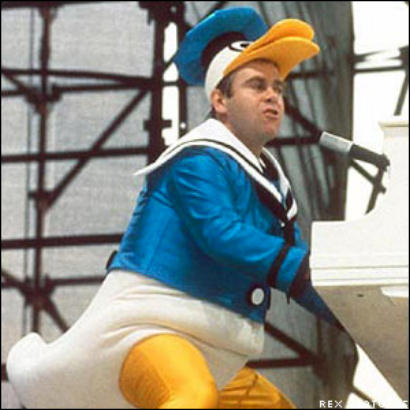
I've also met a group of exceptional people I wouldn't have met if I didn't come out here. This includes a close-knit of friends who also will leave/left town: I said goodbye to Lewis in the Westport Third Watch parking lot at the end of June, Robin and Greg at Blue Koi on 39th street yesterday, Marcus--who is not leaving--at Dave's Stagcoach last night. This whole thing will continue to roll at least through Friday. It hurts in some ways, but I don't want to compare it to something big like death from a long-term cancer, or whatever. That would infer it was never a decision to come here three years ago; rather, it was inflicted on me. I'd rather think of this as an Elton John temporary farewell tour: far too long for it's own good, me dressed like Donald Duck in the end.
The move here and the program led to professional development I didn't expect.
I've also met a group of exceptional people I wouldn't have met if I didn't come out here. This includes a close-knit of friends who also will leave/left town: I said goodbye to Lewis in the Westport Third Watch parking lot at the end of June, Robin and Greg at Blue Koi on 39th street yesterday, Marcus--who is not leaving--at Dave's Stagcoach last night. This whole thing will continue to roll at least through Friday. It hurts in some ways, but I don't want to compare it to something big like death from a long-term cancer, or whatever. That would infer it was never a decision to come here three years ago; rather, it was inflicted on me. I'd rather think of this as an Elton John temporary farewell tour: far too long for it's own good, me dressed like Donald Duck in the end.
Sunday, July 18, 2010
Needs more drunk Tina Fey
i.
This move to Stillwater is coming up quick. I still need to finalize everything.
ii.
I saw three movies in the last 48-ish hours: Inception (friday), Ponyo (Saturday afternoon), and American Splendor.
iii.
Of the three American Splendor was the best--it's visually interesting like the other two movies, messes with story structure in a po-mo sense like the other two movies, but is very clear and easy to follow. That the film functions as biography probably creates that structure to mess around in. I also identify with the film's very Ohio-ness--I've tried to write about this before: It seems Ohio, and to a similar degree Indiana and Michigan, produces the working/lower middle class intellectual stiff. Examples include Vonnegut, Bukowski (who is from LA, yes), Michael Moore, and Pekar.
An early scene in American Splendor has Pekar showing his "comics" (mere scripts with stick figure drawings) to R. Crumb. Pekar talks about the potential to make comics very different from what we expect and compares his work to French filmmakers and the Italian De Sica. I liked this a lot. He doesn't see himself as a revolutionary--there's no manifesto--he's just trying to communicate the Incommunicable At Times, and trying to do it in the least bullshit way possible. There is no high-art/low-art with guys like that. Comics can be uttered in the same breath as new-wave European cinema. Pekar, and the others, mix all culture up, use whatever they can to reach as many people they can. It's an aesthetic I embrace but have a difficult time articulating. I probably won't ever be able to do it.
iv.
Call it general cinematic malaise, but people seem to confuse "intelligent" with "muddled." Human beings themselves can be intelligent and muddled--look at Pekar, Vonnegut, Buk, John Berryman, Einstein, etc. Films shouldn't be--Kurosawa, to paraphrase, said a great movie should be one that's clear and understandable for everyone. Inception doesn't seem clear to ChristopherNolan. An "auteur" I guess, this film and Dark Knight suffer from too many ideas packed into two and a half hours. Nolan needs to simplify his ideas--why not make Extraction, where the characters steal corporate secrets from the minds of billionaire CEOs first, and then make Inception in 2012?
The first third of this film is excellent. Nolan drops us in media res at a real-time pace--we get thrust into the process of infiltrating dreams for corporate secrets in a well crafted action sequence--before Nolan slows down and walks us through the "process" of infiltration in a quick, articulate way. The concept of inception--to place a thought into one another person's mind--is interesting, but complicates the dreamscape and the film's world too much. By the second half the rules established earlier fall apart and I wasn't sure what was going on anymore.
This could be Nolan's ultimate flaw. He makes interesting "intelligent" films but makes them in an era where we crave for any authenticity from Hollywood. That Nolan gives us a sharp-looking film with a cool idea is "good enough" when it's clear that it is not good enough. Nolan may never get feedback he really needs: to simplify his ideas, to focus better.
v.
Ditto Ponyo I guess. Not a lot happens in a narrative sense, but I like Miyzaki's films for their poetic intensity--his movie's small moments make them great. Read the synopsis here. Sosuke lives on a small house on a cliff with his mom (Tina Fey). His dad captains ships and is gone long stretches of time. Early in the film, Sosuke's mom expects Sosuke's dad to come home, but he bails--takes on a second shift. Mom's reaction? She opens a big beer, gets drunk, and angry, but not in a Maury Povich-mom sort of way. It's longing and it's something organic that I don't get from Pixar movies. It's hard to describe the great stuff in Ponyo.
It's easier to describe what kind of sucks about it--nothing seems to happen, there's a little tension but not much. The story is told from the perspective of Sosuke and, like stories told by kids, it's boring construction-wise. To quote my friend Robin, who watched it with me: All the parents respect me (Sosuke) and my Kindergarten girlfriend is jealous of this super cool/perfect girl from the sea. Ponyo drowns this town and everyone seems all right with it. The moon, somehow, has come very close to the earth and could crush it, but whatever: everyone respects Soskue and he'll figure it out because he's fucking five years old.
vi.
I hope this all makes sense. I hate when people write stuff and call it a "rant." That's not interesting.
This move to Stillwater is coming up quick. I still need to finalize everything.
ii.
I saw three movies in the last 48-ish hours: Inception (friday), Ponyo (Saturday afternoon), and American Splendor.
iii.
Of the three American Splendor was the best--it's visually interesting like the other two movies, messes with story structure in a po-mo sense like the other two movies, but is very clear and easy to follow. That the film functions as biography probably creates that structure to mess around in. I also identify with the film's very Ohio-ness--I've tried to write about this before: It seems Ohio, and to a similar degree Indiana and Michigan, produces the working/lower middle class intellectual stiff. Examples include Vonnegut, Bukowski (who is from LA, yes), Michael Moore, and Pekar.
An early scene in American Splendor has Pekar showing his "comics" (mere scripts with stick figure drawings) to R. Crumb. Pekar talks about the potential to make comics very different from what we expect and compares his work to French filmmakers and the Italian De Sica. I liked this a lot. He doesn't see himself as a revolutionary--there's no manifesto--he's just trying to communicate the Incommunicable At Times, and trying to do it in the least bullshit way possible. There is no high-art/low-art with guys like that. Comics can be uttered in the same breath as new-wave European cinema. Pekar, and the others, mix all culture up, use whatever they can to reach as many people they can. It's an aesthetic I embrace but have a difficult time articulating. I probably won't ever be able to do it.
iv.
Call it general cinematic malaise, but people seem to confuse "intelligent" with "muddled." Human beings themselves can be intelligent and muddled--look at Pekar, Vonnegut, Buk, John Berryman, Einstein, etc. Films shouldn't be--Kurosawa, to paraphrase, said a great movie should be one that's clear and understandable for everyone. Inception doesn't seem clear to ChristopherNolan. An "auteur" I guess, this film and Dark Knight suffer from too many ideas packed into two and a half hours. Nolan needs to simplify his ideas--why not make Extraction, where the characters steal corporate secrets from the minds of billionaire CEOs first, and then make Inception in 2012?
The first third of this film is excellent. Nolan drops us in media res at a real-time pace--we get thrust into the process of infiltrating dreams for corporate secrets in a well crafted action sequence--before Nolan slows down and walks us through the "process" of infiltration in a quick, articulate way. The concept of inception--to place a thought into one another person's mind--is interesting, but complicates the dreamscape and the film's world too much. By the second half the rules established earlier fall apart and I wasn't sure what was going on anymore.
This could be Nolan's ultimate flaw. He makes interesting "intelligent" films but makes them in an era where we crave for any authenticity from Hollywood. That Nolan gives us a sharp-looking film with a cool idea is "good enough" when it's clear that it is not good enough. Nolan may never get feedback he really needs: to simplify his ideas, to focus better.
v.
Ditto Ponyo I guess. Not a lot happens in a narrative sense, but I like Miyzaki's films for their poetic intensity--his movie's small moments make them great. Read the synopsis here. Sosuke lives on a small house on a cliff with his mom (Tina Fey). His dad captains ships and is gone long stretches of time. Early in the film, Sosuke's mom expects Sosuke's dad to come home, but he bails--takes on a second shift. Mom's reaction? She opens a big beer, gets drunk, and angry, but not in a Maury Povich-mom sort of way. It's longing and it's something organic that I don't get from Pixar movies. It's hard to describe the great stuff in Ponyo.
It's easier to describe what kind of sucks about it--nothing seems to happen, there's a little tension but not much. The story is told from the perspective of Sosuke and, like stories told by kids, it's boring construction-wise. To quote my friend Robin, who watched it with me: All the parents respect me (Sosuke) and my Kindergarten girlfriend is jealous of this super cool/perfect girl from the sea. Ponyo drowns this town and everyone seems all right with it. The moon, somehow, has come very close to the earth and could crush it, but whatever: everyone respects Soskue and he'll figure it out because he's fucking five years old.
vi.
I hope this all makes sense. I hate when people write stuff and call it a "rant." That's not interesting.
Friday, July 9, 2010
Stuff Stuff Stuff
i.
Willow Springs 66 is out. I have two poems in it. It's a solid issue.
ii.
When anyone says out loud "You know, lately, people ask me Hey [Name here], 'what do you think of [important topic to Name here]?' Friends, here's my take..." no one has asked that individual their opinion on the important topic. No one asks Bill O'Reilly or Colin Cowheard their opinions on anything. Ditto Stephen Colbert and Jon Stewart--though those two are conscious of the trope and exploit it. I only bring this up so that I can talk about LeBron James.
iii.
I'm from southwest Ohio so, like everybody outside of the Cleveland-Akron-Canton megalopolis, I never followed the Cavaliers before he arrived. So if people outside of that megalopolis mourn, it's probably crocodile tears. I got the Cincinnati Reds right now, I've never actually been to Akron, and I will move to Stillwater at the end of the month; so I'll just follow Kevin Durant and the Thunder (who seem to be setting people up for a 1996-1998 Utah Jazz-style disappointment: they will win, make it to the finals then lose to the Miami Heat--an easier disappointment because overcoming market economics to raise yourself up by your bootstraps only to lose to an unstoppable-team-of-destiny-touched-by-God is easier to reconcile, because you lacked control from the beginning).
LeBron, however, is not unlike any other lower-middle class/poor kid from a post-industrial, medium-sized Ohio town. You want to love your city, you want to represent it and share its great qualities with the world, but you will always leave. The only people who stay in Dayton: (a) come from money, (b) have an engineering background (that usually means they come from money), (c) lucked into a stable profession that keeps them comfortable, or (d) had few options and are stuck. If someone has the option to leave, they take it. I imagine Cleveland-Akron-Canton is very similar. It is accurate for similar kids from Toldeo, Mansfield, and Zanesville. Cincinnati doesn't count because it is Cincinnati. Columbus is cosmopolitan, a sort of Austin Texas-like aberration.
iv.
LeBron will miss northeast Ohio, and talk about it his first year in Miami. Annoy Bosh and Wade with anecdotes about how Sushi Rock on West 6th beats Toni's Sushi. Talk about how the Marlins bought a World Series in 1997 without any notion of irony. Guys from Ohio like to talk about how much they love Ohio, but don't want to live there. The only friends Guys Who Leave Ohio have left in Ohio are guys like Delonte West. LeBron will adjust and the Heat will win a title in 2012. And in 2030, he will cover the Cavaliers for FOX Sports Ohio. He will wear bowties and thick-framed glasses like the ones worn by dictators.
Willow Springs 66 is out. I have two poems in it. It's a solid issue.
ii.
When anyone says out loud "You know, lately, people ask me Hey [Name here], 'what do you think of [important topic to Name here]?' Friends, here's my take..." no one has asked that individual their opinion on the important topic. No one asks Bill O'Reilly or Colin Cowheard their opinions on anything. Ditto Stephen Colbert and Jon Stewart--though those two are conscious of the trope and exploit it. I only bring this up so that I can talk about LeBron James.
iii.
I'm from southwest Ohio so, like everybody outside of the Cleveland-Akron-Canton megalopolis, I never followed the Cavaliers before he arrived. So if people outside of that megalopolis mourn, it's probably crocodile tears. I got the Cincinnati Reds right now, I've never actually been to Akron, and I will move to Stillwater at the end of the month; so I'll just follow Kevin Durant and the Thunder (who seem to be setting people up for a 1996-1998 Utah Jazz-style disappointment: they will win, make it to the finals then lose to the Miami Heat--an easier disappointment because overcoming market economics to raise yourself up by your bootstraps only to lose to an unstoppable-team-of-destiny-touched-by-God is easier to reconcile, because you lacked control from the beginning).
LeBron, however, is not unlike any other lower-middle class/poor kid from a post-industrial, medium-sized Ohio town. You want to love your city, you want to represent it and share its great qualities with the world, but you will always leave. The only people who stay in Dayton: (a) come from money, (b) have an engineering background (that usually means they come from money), (c) lucked into a stable profession that keeps them comfortable, or (d) had few options and are stuck. If someone has the option to leave, they take it. I imagine Cleveland-Akron-Canton is very similar. It is accurate for similar kids from Toldeo, Mansfield, and Zanesville. Cincinnati doesn't count because it is Cincinnati. Columbus is cosmopolitan, a sort of Austin Texas-like aberration.
iv.
LeBron will miss northeast Ohio, and talk about it his first year in Miami. Annoy Bosh and Wade with anecdotes about how Sushi Rock on West 6th beats Toni's Sushi. Talk about how the Marlins bought a World Series in 1997 without any notion of irony. Guys from Ohio like to talk about how much they love Ohio, but don't want to live there. The only friends Guys Who Leave Ohio have left in Ohio are guys like Delonte West. LeBron will adjust and the Heat will win a title in 2012. And in 2030, he will cover the Cavaliers for FOX Sports Ohio. He will wear bowties and thick-framed glasses like the ones worn by dictators.
Monday, June 14, 2010
Super Arrow 2
The new issue of Super Arrow is online. My contribution is here. I like Elieen G'Sell's poems--especially this one.
I try the jarring ending line but it never seems to work. She does this very well.
I try the jarring ending line but it never seems to work. She does this very well.
Monday, May 17, 2010
Poor White text via Project Gutenberg
You can get Poor White here.
I read three chapters last night--Hugh McVey, a lankey Missourian, moves east to Ohio to find a connection with people around him. It's yet to work out. I've only read this and Winesburg but Anderson, and to a lesser degree James Thurber and Kurt Vonnegut, capture Indiana-Ohio male loneliness well. And Anderson wrote in a period of rust-belt prosperity too. Thurber wrote from the safety of New York. Vonnegut saw the tail end of it.
That's all I got right now.
I read three chapters last night--Hugh McVey, a lankey Missourian, moves east to Ohio to find a connection with people around him. It's yet to work out. I've only read this and Winesburg but Anderson, and to a lesser degree James Thurber and Kurt Vonnegut, capture Indiana-Ohio male loneliness well. And Anderson wrote in a period of rust-belt prosperity too. Thurber wrote from the safety of New York. Vonnegut saw the tail end of it.
That's all I got right now.
Sunday, May 16, 2010
I could've read Sherwood Anderson but went with Real Genius (1985)
i.
Martha Coolidge's film works best when Chris Knight (Kilmer) and Mitch Taylor (Gabriel Jarret) deal with the alienation of work in a specific field. Creative writing students and scientists connect only at that point of alienation it seems; they both think in ways that dumbfound businessmen and communicators of the world. The two montages--an inappropriate number: You should have one or three, a golden ratio--of Knight and Taylor's adjustment seem particularly relate-able. To ride easy on talent only to be forced to use it. I hope I don't sound arrogant. My old roommate Ethan was a chemist. Most of our conversation revolved around tv shows and movies, but we also shared in the triviales of publication, funding, and "the right programs." Things other people in other fields don't worry as much about, maybe.
It's when the film gets silly does it suck. Building a five-megawatt chemical laser seems ridiculous but it is handled well. Val Kilmer and his friends jump the shark when they break into a secret military base to sabotage said-chemical laser and point it at Prof. Jerry Hathaway's (William Atherton) house, which they destroy by filling it with popcorn. The film's tonal shift from college-growing pains to espionage lacks the bite of wild tonal-shifts found in Korean movies like Old Boy--that we benefit from a culture that dictates form might be why we fail at shifting tones as easily.
I like Real Genius a lot though. William Atherton's character reminds me of Whitney Terrell. Not that Whitney's a villain. Both men exude a toughness/cockiness and Knight and Taylor both crave for his approval on different levels through the film. Knight barbs him but needs to graduate. Taylor, intimidated/admired that Hathaway picked him out, finds a mentor in him. All this shit gets thrown out the window when the duo creates a death machine. The white males in UMKC's program felt that way about Whitney--the desire to one-up him and receive approval. I was the poet so I was a bit outside of the admiration.
ii.
Robin took me to Arthur Bryant's for my birthday. The two things I know about Calvin Trillin are these: (1) he's from Kansas City (2) he called Arthur Bryant's the best restaurant in the world. I kind of agree on the latter. The sauce is excellent, a gritty-bitter difficult to emulate, but Gates has better fries and meet--except maybe burnt-ends, which Bryant's does a better job of.
The original is located at about 18th and is probably the furthest east any upper-middle class white people travel within the city. I don't think Trillin brings this up but I hear this addage from said white people: "Arthur Bryant's is the only place where you see all walks of life together, eating, joking, living happily," etc. etc. etc. This disregards the fact that black people cook and serve the food for white people. I never see any accountants with blackberries hanging from their belts eating with trumpet players in bright yellow suits.
An old guy and his wife ate at a table near us. Lewis and Greg were also there. The old guy wore what looked like a bushwhacker hat--Lewis joked that this guy's attire was fairly accurate of what white people think of east Kansas City: The whole place is a safari to them, the outback to them.
It's funny to see other white people order at Arthur Bryant's and Gates. They hold up the line, ask for extra-crispy fries or light sauce on short-ends. They then get what everyone else gets or nothing at all--like the soup nazi episode in Seinfeld.
iii.
Sean and Amy gave me Poor White, Anderson's novel after Winesburg, Ohio. I've read just a little. A young man lifts himself up from his bootstraps, becomes a great inventor. Anderson's prose works much like Winesburg's here. The omniscient narrator operates in exposition with few scenes. It seems to make more sense than in Winesburg--Lewis pointed out those stories are narrated by a periphery character who seems to have an exceptional amount of dirt on the whole town. A more sinister Della Reese or Bruno Ganz noting the inhabitants. Poor White's narrator is no angel or side-character. There's also not much going on so far. It lacks the paper pills, the strange images of Winesburg. The quiet desperation as well. Maybe it'll pick up.
Martha Coolidge's film works best when Chris Knight (Kilmer) and Mitch Taylor (Gabriel Jarret) deal with the alienation of work in a specific field. Creative writing students and scientists connect only at that point of alienation it seems; they both think in ways that dumbfound businessmen and communicators of the world. The two montages--an inappropriate number: You should have one or three, a golden ratio--of Knight and Taylor's adjustment seem particularly relate-able. To ride easy on talent only to be forced to use it. I hope I don't sound arrogant. My old roommate Ethan was a chemist. Most of our conversation revolved around tv shows and movies, but we also shared in the triviales of publication, funding, and "the right programs." Things other people in other fields don't worry as much about, maybe.
It's when the film gets silly does it suck. Building a five-megawatt chemical laser seems ridiculous but it is handled well. Val Kilmer and his friends jump the shark when they break into a secret military base to sabotage said-chemical laser and point it at Prof. Jerry Hathaway's (William Atherton) house, which they destroy by filling it with popcorn. The film's tonal shift from college-growing pains to espionage lacks the bite of wild tonal-shifts found in Korean movies like Old Boy--that we benefit from a culture that dictates form might be why we fail at shifting tones as easily.
I like Real Genius a lot though. William Atherton's character reminds me of Whitney Terrell. Not that Whitney's a villain. Both men exude a toughness/cockiness and Knight and Taylor both crave for his approval on different levels through the film. Knight barbs him but needs to graduate. Taylor, intimidated/admired that Hathaway picked him out, finds a mentor in him. All this shit gets thrown out the window when the duo creates a death machine. The white males in UMKC's program felt that way about Whitney--the desire to one-up him and receive approval. I was the poet so I was a bit outside of the admiration.
ii.
Robin took me to Arthur Bryant's for my birthday. The two things I know about Calvin Trillin are these: (1) he's from Kansas City (2) he called Arthur Bryant's the best restaurant in the world. I kind of agree on the latter. The sauce is excellent, a gritty-bitter difficult to emulate, but Gates has better fries and meet--except maybe burnt-ends, which Bryant's does a better job of.
The original is located at about 18th and is probably the furthest east any upper-middle class white people travel within the city. I don't think Trillin brings this up but I hear this addage from said white people: "Arthur Bryant's is the only place where you see all walks of life together, eating, joking, living happily," etc. etc. etc. This disregards the fact that black people cook and serve the food for white people. I never see any accountants with blackberries hanging from their belts eating with trumpet players in bright yellow suits.
An old guy and his wife ate at a table near us. Lewis and Greg were also there. The old guy wore what looked like a bushwhacker hat--Lewis joked that this guy's attire was fairly accurate of what white people think of east Kansas City: The whole place is a safari to them, the outback to them.
It's funny to see other white people order at Arthur Bryant's and Gates. They hold up the line, ask for extra-crispy fries or light sauce on short-ends. They then get what everyone else gets or nothing at all--like the soup nazi episode in Seinfeld.
iii.
Sean and Amy gave me Poor White, Anderson's novel after Winesburg, Ohio. I've read just a little. A young man lifts himself up from his bootstraps, becomes a great inventor. Anderson's prose works much like Winesburg's here. The omniscient narrator operates in exposition with few scenes. It seems to make more sense than in Winesburg--Lewis pointed out those stories are narrated by a periphery character who seems to have an exceptional amount of dirt on the whole town. A more sinister Della Reese or Bruno Ganz noting the inhabitants. Poor White's narrator is no angel or side-character. There's also not much going on so far. It lacks the paper pills, the strange images of Winesburg. The quiet desperation as well. Maybe it'll pick up.
Wednesday, May 12, 2010
I went back to Dayton last week a broke-ass. Friends paid my bills at places--mostly cheap beer and chicken wings in hot sauce. I tried to leave as small a foot print as possible.
Dad and I get drunk at BW3s every trip I'm back now, it seems. It's cheap and near enough to the house he lets me drive. I'm much taller than my dad--he's 5'10, about 180. More stubborn than me and tough, an inner-city public librarian. We both drank until near blackout. He never drinks at other times, I think.
I told friends I'd make it rain for them one day. A reference to Fat Joe's song, because I'm still white and lived in a town that was technically a suburb. My Dad's response: "Are you the Kwisatz Haderach?" His question a reference to Frank Herbert's Dune and it's white male messiah with a poison knife. A messiah whose eyes turn blue after he's chosen.
Writing's been tough the last few weeks. I feel it might be coming back.
Dad and I get drunk at BW3s every trip I'm back now, it seems. It's cheap and near enough to the house he lets me drive. I'm much taller than my dad--he's 5'10, about 180. More stubborn than me and tough, an inner-city public librarian. We both drank until near blackout. He never drinks at other times, I think.
I told friends I'd make it rain for them one day. A reference to Fat Joe's song, because I'm still white and lived in a town that was technically a suburb. My Dad's response: "Are you the Kwisatz Haderach?" His question a reference to Frank Herbert's Dune and it's white male messiah with a poison knife. A messiah whose eyes turn blue after he's chosen.
Writing's been tough the last few weeks. I feel it might be coming back.
Wednesday, April 28, 2010
Tuesday, April 27, 2010
Monday, April 26, 2010
My birthday is May 13
If you know me, here are some books I would like you to buy for me for my birthday. When I open the gift I will be surprised for real:
A Mouth in California by Graham Foust
The Difficult Farm by Heather Christie
Iowa by Travis Nichols
Pigafetta is My Wife by Joe Hall
A Mouth in California by Graham Foust
The Difficult Farm by Heather Christie
Iowa by Travis Nichols
Pigafetta is My Wife by Joe Hall
Friday, April 23, 2010
Odds and ends
i.
I saw Chang Rae Lee read at the Kansas City Public Library. Whitney Terrell brought him in. Lee signed books and then Lewis, Zac, me, and some others went to the Harry's Country Club to sit around and drink. I talked to Chang Rae about Korean cinema. He said something good and precise: The closest American filmmaker to the Korean style is Quentin Tarantino and even he is conservative. Where Tarantino ties himself to his aesthetic completely--Kill Bill, Inglorious Basterds, Pulp Fiction all operate chaotically, but still within a strict genre form--Korean filmmakers like Im Sang-Soo and Park Chan-woo deconstruct form and convention with exactness. They shift from slapstick comedy to ultra violence in a single scene. Such are Koreans--they work hard, then party as if they're ready to die. And only they can pull it off.
This is my problem: I blow up the form before I learn it. I run too much off of energy.
ii.
I think I can expand this idea through the metaphor of neighborhoods. Drive through an old neighborhood in a city and you'll see lots of different houses close together: Second Empire, Queen Anne, etc. Old trees envelope them. The yards are green but a little wild--they look like Woody Allen from the early 70's--and dandelions hang out in there and on the burns. My work always ends up like this; a unity in variety if that's possible (usually I fail at that, too, like this metaphor).
iii.
Now think of suburbia or better Kansas. No trees stand over big bright cookie-cutter houses. The yards uniform and wide, buzzed like R. Lee Ermey, they all look the same. If there's a variety in houses, it's a more explicit economic indicator. Bigger means you sell more and care less about detail. My work never ends up tight, but I must appreciate this approach: It is safer, can be fun. I could learn to play more golf in this environment. I will like driving through old neighborhoods more.
iv.
I'll be reading with Marcus Myers, Jeff Pollard, and Karla Deel Friday, April 30 in Lawrence, KS at Mirth Cafe, 745 New Hampshire.
v.
I will attend the PhD in Creative Writing at Oklahoma State University this fall.
I saw Chang Rae Lee read at the Kansas City Public Library. Whitney Terrell brought him in. Lee signed books and then Lewis, Zac, me, and some others went to the Harry's Country Club to sit around and drink. I talked to Chang Rae about Korean cinema. He said something good and precise: The closest American filmmaker to the Korean style is Quentin Tarantino and even he is conservative. Where Tarantino ties himself to his aesthetic completely--Kill Bill, Inglorious Basterds, Pulp Fiction all operate chaotically, but still within a strict genre form--Korean filmmakers like Im Sang-Soo and Park Chan-woo deconstruct form and convention with exactness. They shift from slapstick comedy to ultra violence in a single scene. Such are Koreans--they work hard, then party as if they're ready to die. And only they can pull it off.
This is my problem: I blow up the form before I learn it. I run too much off of energy.
ii.
I think I can expand this idea through the metaphor of neighborhoods. Drive through an old neighborhood in a city and you'll see lots of different houses close together: Second Empire, Queen Anne, etc. Old trees envelope them. The yards are green but a little wild--they look like Woody Allen from the early 70's--and dandelions hang out in there and on the burns. My work always ends up like this; a unity in variety if that's possible (usually I fail at that, too, like this metaphor).
iii.
Now think of suburbia or better Kansas. No trees stand over big bright cookie-cutter houses. The yards uniform and wide, buzzed like R. Lee Ermey, they all look the same. If there's a variety in houses, it's a more explicit economic indicator. Bigger means you sell more and care less about detail. My work never ends up tight, but I must appreciate this approach: It is safer, can be fun. I could learn to play more golf in this environment. I will like driving through old neighborhoods more.
iv.
I'll be reading with Marcus Myers, Jeff Pollard, and Karla Deel Friday, April 30 in Lawrence, KS at Mirth Cafe, 745 New Hampshire.
v.
I will attend the PhD in Creative Writing at Oklahoma State University this fall.
Tuesday, April 6, 2010
"Drawing"
Tao Lin gave a lecture at KCAI on Friday. Part of lecture involved his drawing process--how he crafted his hamsters, etc. He had people come up and draw hamsters on a whiteboard to be judged. I didn't go up. I did try to draw something based on his process, however. Today I tried to recreate it in MS Paint:

It's supposed to be John Berryman. I tried to give him the neutral face and the "author-photo" pose, but I fumbled the eyes. The hair is off.
The lecture was cool. We ate sushi with him afterward and joked around.
Three journals that include my poems have arrived in the last two days: Harpur Palate, Hayden's Ferry Review, and West Wind Review. They are all mother-fucking bomb-ass. It's cool to be accepted with these people.

It's supposed to be John Berryman. I tried to give him the neutral face and the "author-photo" pose, but I fumbled the eyes. The hair is off.
The lecture was cool. We ate sushi with him afterward and joked around.
Three journals that include my poems have arrived in the last two days: Harpur Palate, Hayden's Ferry Review, and West Wind Review. They are all mother-fucking bomb-ass. It's cool to be accepted with these people.
Sunday, March 28, 2010
The gift for breeders
Last night I stayed home and drank a little Svdeka, Lewis left it over here the night before, and watched a rerun of SNL featuring John Ham. It was terrible.
During the show they ran this Kindle ad:
Those people don't look like they read--maybe they do, but I'm pretty sure they don't. If they lived in Kansas City, they'd hang out in Broadway Cafe all day and hold Mother Night or Cheese Monkeys to their faces, eyes darting for others around the place. Maybe not Mother Night, but Everything is Illuminated.
They'd then come to Dave's Stagecoach and try to drink at tour table, commend Lewis for his jukebox picks, patronize the one black customer--the guy with pitbulls in his pickup truck, who loves thrash metal. The Kindle Kids will ask him if he loves Lil' Wayne.
I have a lesion on my face from something, that's why I'm crabby.
Jimmy Chen posted HTMLGiant's official Kindle Post a few weeks ago. It was funny and I never thought about the 1996 implication. Remember Newton?
I started reading Mother Night--a .48 paperback copy. The paper smells like cinnamon. About page 60, I met Reverend Doctor Lionel Jason Jones D.D.S, D.D and the other and the other "antiqued fascists." Jones praises Howard W. Campbell Jr., the Nazi propagandist/American spy, for telling the truth "when everybody else was telling lies." Clearly, Campbell told lies--the truth Jones and his friends embraced were not real at all. Campbell doesn't say anything. Yet, at least. I'm still working through it.
I wonder if Glenn Beck might be like Campbell in some way. What does he say when Mr.Upper-Middle-Class-Guy from Cincinnati, who threw dollars at Parkinson sufferers at a Teabag Rally, shakes Mr. Beck's hand and calls him a ray of light. Deep down, I want Beck to really be a sham, a guy who undermines the right in secret. A Kurt Vonnegut character.
I like the smell of cheap books. I like the sentences of the rust-belt intelligentsia.
During the show they ran this Kindle ad:
Those people don't look like they read--maybe they do, but I'm pretty sure they don't. If they lived in Kansas City, they'd hang out in Broadway Cafe all day and hold Mother Night or Cheese Monkeys to their faces, eyes darting for others around the place. Maybe not Mother Night, but Everything is Illuminated.
They'd then come to Dave's Stagecoach and try to drink at tour table, commend Lewis for his jukebox picks, patronize the one black customer--the guy with pitbulls in his pickup truck, who loves thrash metal. The Kindle Kids will ask him if he loves Lil' Wayne.
I have a lesion on my face from something, that's why I'm crabby.
Jimmy Chen posted HTMLGiant's official Kindle Post a few weeks ago. It was funny and I never thought about the 1996 implication. Remember Newton?

I started reading Mother Night--a .48 paperback copy. The paper smells like cinnamon. About page 60, I met Reverend Doctor Lionel Jason Jones D.D.S, D.D and the other and the other "antiqued fascists." Jones praises Howard W. Campbell Jr., the Nazi propagandist/American spy, for telling the truth "when everybody else was telling lies." Clearly, Campbell told lies--the truth Jones and his friends embraced were not real at all. Campbell doesn't say anything. Yet, at least. I'm still working through it.
I wonder if Glenn Beck might be like Campbell in some way. What does he say when Mr.Upper-Middle-Class-Guy from Cincinnati, who threw dollars at Parkinson sufferers at a Teabag Rally, shakes Mr. Beck's hand and calls him a ray of light. Deep down, I want Beck to really be a sham, a guy who undermines the right in secret. A Kurt Vonnegut character.
I like the smell of cheap books. I like the sentences of the rust-belt intelligentsia.
Also, via HTMLGiant
http://www.theatlantic.com/politics/archive/2010/03/the-tea-partys-rank-amateurism/38077/
Saturday, March 20, 2010
I found Triple Canopy today thanks to HTMLGiant. The second piece I read came from Triple Canopy 5: Television for the People.
In high school, I took video production classes and hung out in the studio all the time. One video segment I made every week was Stag Beetle--I played a luchador with the power of the bug. Instead of a colorful mask, I used my dad's ski mask.
Nothing seems to work right now.
In high school, I took video production classes and hung out in the studio all the time. One video segment I made every week was Stag Beetle--I played a luchador with the power of the bug. Instead of a colorful mask, I used my dad's ski mask.
Nothing seems to work right now.
Monday, March 8, 2010
New Book Rundown, Hayden's Ferry Contributor Spotlight
What I have new:
Motorman David Ohle
EVER Blake Butler
The Black Automoton Douglas Kearney
A Sunday in God Years Michelle Boisseau
Complete Poems and Selected Letters of Hart Crane
I've also been re-reading Larry Levis--Elegy, Dollmaker's Ghost, The Afterlife. Have a bunch of Simic too. My reading of all these has been very buffet. I read a poem here, a poem there. Motorman became my focus last night.
I wrote a contributor spot for Hayden's Ferry Review. They let me reference Sam Bowie.
Maybe things are picking up.
Motorman David Ohle
EVER Blake Butler
The Black Automoton Douglas Kearney
A Sunday in God Years Michelle Boisseau
Complete Poems and Selected Letters of Hart Crane
I've also been re-reading Larry Levis--Elegy, Dollmaker's Ghost, The Afterlife. Have a bunch of Simic too. My reading of all these has been very buffet. I read a poem here, a poem there. Motorman became my focus last night.
I wrote a contributor spot for Hayden's Ferry Review. They let me reference Sam Bowie.
Maybe things are picking up.
Thursday, February 25, 2010
Love poem to Mirjam Ott, Captain, Swiss Women's Curling Team

(draft)
Let me sweep your surface with my broom.
Knock that rock into your circle
and score anything but a blank in your end.
Those brunette curls in my hands, your eyes
motherfucking crazy, my friend Jeanne
said your eyes were that. She wouldn't trust you.
Yell "go" in Swiss like we're in the Olympics.
I'll pashaw those Swedes and Danish
sisters, all blonds, all black tights, skirts.
Drop those Adidas athletic pants, please.
Men's hockey bores me. Your perfect shot
from your knees, your knock-out
percentage of 85%
(Olympic average: 68%)
do not bore me. Your face
I've seen before. In dreams
it is blurred when looked at
straight on, like you cover your face with silk
when I talk to you and everything--
the face, nose, those sniper eyes--
only focus in my peripheral
vision, when you're on NBC doggy style.
The rock in your hand, that clarity/
Deja vu sense comes back and I'm all right
again. I see you in high def.
Stay with me and fuck Canada.
Wednesday, February 17, 2010
Wednesday, February 3, 2010
In the beginning, everyone looked like Tim Tebow
Writing this thesis has got me thinking about the intentionality my pop culture artifacts lack. If I use pop culture, it needs to be in a way to get to the image without distracting the reader. Robert Haas had a poem that used the climatic scene involving Toshiro Mifune in Seven Samurai. I over complicate and get to convoluted. I'm not sure how to get around that. My sentences all sound the fucking same.
I submitted to the Poetry Society of America's chapbook contest in December. I rounded up the poems I felt like were the most successful, further edited them, and sent the whole thing out at the deadline. Everything seems insurmountable. Even when I get work placed, and start to think about a chap or a book, the whole thing never feels done. I think this is why I don't have multiple chaps or a manuscript done. Who wants to read? Who will read it? I think I communicate clearly but everybody leaves, so I must not articulate myself very well.
I found Ron Silliman's post about contests this morning (scroll down a little for the post)--this made me feel a little bit better.
Keep truckin' right?
I submitted to the Poetry Society of America's chapbook contest in December. I rounded up the poems I felt like were the most successful, further edited them, and sent the whole thing out at the deadline. Everything seems insurmountable. Even when I get work placed, and start to think about a chap or a book, the whole thing never feels done. I think this is why I don't have multiple chaps or a manuscript done. Who wants to read? Who will read it? I think I communicate clearly but everybody leaves, so I must not articulate myself very well.
I found Ron Silliman's post about contests this morning (scroll down a little for the post)--this made me feel a little bit better.
Keep truckin' right?
Tuesday, February 2, 2010
FRiGG Law and Order Issue 27
FRiGG 27 is up now. I have a poem in it. Ellen Parker, the editor, asked me in the fall if I watched Law and Order. I said yes and she asked me to contribute something. Julianne Nicholson probably doesn't read poetry. That might be a good thing, because I think she's pregnant. Her husband's last name is Cake.
Mathias Svalina's Destruction Myth is quite good and exciting. I have been reading it with the intention of reviewing it for New Letters. The last time I talked about wishing America would implode so I can write Tomaz Salamun or Charles Simic poems with greater authenticity--they write well, they're funny and they're beautiful. The mix of violence, surrealism, and hope, I thought, could not be captured by a white, male, American poet.
Svalina nails this feeling by using American cultural artifacts within the context of Judeo-Christian-American creation myth. It's violent, it's funny, it's beautiful, and it's sad. He's successful when me, and others, are not. He does not graft Eastern European images onto American sentiment. It never gets hollow. The form gets a bit repetitive, but the poems never die in the shell. He reminds me of the best of Simic and friends.
I hope that's accurate. That's the spirit I'm trying to capture in the review. I don't know how to review anything though.
Mathias Svalina's Destruction Myth is quite good and exciting. I have been reading it with the intention of reviewing it for New Letters. The last time I talked about wishing America would implode so I can write Tomaz Salamun or Charles Simic poems with greater authenticity--they write well, they're funny and they're beautiful. The mix of violence, surrealism, and hope, I thought, could not be captured by a white, male, American poet.
Svalina nails this feeling by using American cultural artifacts within the context of Judeo-Christian-American creation myth. It's violent, it's funny, it's beautiful, and it's sad. He's successful when me, and others, are not. He does not graft Eastern European images onto American sentiment. It never gets hollow. The form gets a bit repetitive, but the poems never die in the shell. He reminds me of the best of Simic and friends.
I hope that's accurate. That's the spirit I'm trying to capture in the review. I don't know how to review anything though.
Friday, January 22, 2010
On escaping America
Robert Whiting lacks a "literary gloss"--his sentences clunky at times, with a focus on pure information--but his ability for providing the funniest and most relevant details makes him enviable. I read You Gotta Have Wa, Tokyo Underworld, and The Samurai Way of Baseball (also called the The Ichiro Effect) when I lived in Japan. He is funny, clear, mostly precise, and informed. Japan Times is currently running a four part series about Bobby Valentine's managerial run with the Chiba Lotte Marines. I lived in Okayama, two hours west of Osaka, for six months from August 2005 to March 2006. Valentine's Marines won the Japan Series that fall, sweeping the Hanshin Tigers--the team from Osaka. Our friends felt much grief; the Tigers haven't won a Japan Series for 25 years now. The Marines hadn't won a series since 1974. It was Japan's equivlent of the Cubs sweeping the Indians in a World Series.

I see the maps of America broken up and kind of wish it would happen. Maybe I could make better art. I'd live in the Canada zone, so I would have free health care and could quit thinkings about how I should've been an engineer--you know, for the benefits, without the worry to pay for broken legs or heart attacks. The loss of country would help with generating grief. I could be a real Tomaz Salamun--a poet who has actually known cultural defeat, experienced a greater anguish than bear market-byproduct ostricism. I wonder if other white males who write think about this.
Sam Pink's I am Going to Clone Myself then Kill the Clone and Eat It has been picked up by a Norweigan press--they will call it I LOVE YOU. Pink posted a link to Flamme Forlag, the publisher. I looked around and found this book in the catalog. I loved the google translation of the excerpt:
Just go, you are right behind you. Why isn't this translated into English? I though 8-bit was in.

I see the maps of America broken up and kind of wish it would happen. Maybe I could make better art. I'd live in the Canada zone, so I would have free health care and could quit thinkings about how I should've been an engineer--you know, for the benefits, without the worry to pay for broken legs or heart attacks. The loss of country would help with generating grief. I could be a real Tomaz Salamun--a poet who has actually known cultural defeat, experienced a greater anguish than bear market-byproduct ostricism. I wonder if other white males who write think about this.
Sam Pink's I am Going to Clone Myself then Kill the Clone and Eat It has been picked up by a Norweigan press--they will call it I LOVE YOU. Pink posted a link to Flamme Forlag, the publisher. I looked around and found this book in the catalog. I loved the google translation of the excerpt:
There er'n, there he is, right? Du må slå'n me' brettet da, mæl til bakfra, prøv å få'ni bakken, så kan vi sparke'n. You must slå'n me 'board as, Mæl to the rear, try få'ni ground, so we can sparke'n. Eller du kan ta nosen, så tar jeg tailen, og så bare smeller vi ti'n me' trucken. Or you can take Nøsen, I'll take the tail, and then just slams we ti'n me 'truck. Ja, da kan'n faen meg angre. Yes, when kan'n goddamn regret. Ja, jeg er rett bak deg. Yes, I'm right behind you. Bare gå du, er rett bak deg. Just go, you are right behind you. Og så prøver du å slå her, ikke sant? And then try to turn here, right? Her. Here. Vi bare beiner før det kommer no'n, ta're me' ro. We legs for the upcoming no'n, ta're me 'ro.
Just go, you are right behind you. Why isn't this translated into English? I though 8-bit was in.
Friday, January 15, 2010
Gem City/Fountain City
My friend Greg, through his press Rabbit Catastrophe, is selling my chapbook Gem City/Fountain City. You can order a copy at his blog.
If you're interested in reviewing it, please contact Greg through his profile.
If you're interested in reviewing it, please contact Greg through his profile.
Sunday, January 10, 2010
Maybe we need a Diocletian
My roommate Jeff bought Pepsi Throwback. This reminded me of a conversation with my friend Chris about the late Roman empire. He said in the third and fourth centuries, during the decline, the roman architecture became a collage of PAX Romana, Augustan, and Republic, styles. They no longer experimented, simply recycled old things from glory days. I love old Pepsi cans more than new Pepsi cans. I embrace their return, but I wonder if we're in our own crisis of the third century. This also could explain the success of Mad Men.
Also, in the future, I will be more dillegent in proof-reading my posts.
Also, in the future, I will be more dillegent in proof-reading my posts.
Wednesday, January 6, 2010
Bullet suspended for possesion of unloaded firearm.

Gilbert Arenas' indefinite suspension from basketball will result in the NBA being further branded as a "thug league" with their players being branded, unfairly and uninterestingly as "thugs" (it's already started).
This, of course, further overshadows guys like Milwaukee Bucks' rookie Brandon Jennings. Jennings circumvented the NBA's draft rule--players need to be one year removed from high school or nineteen years old--by moving to Italy and playing there a year. Some credit the move to Europe for his rapid maturation as a player where he faced former, and future, NBA talent on a night-by-night basis. He's second among rookie's in scoring (19.0 pg), first in assists (5.9 pg), and tenth rebounds (3.8 pg). Not bad for a guard. That he opted to play in Italy is even cooler--the move of, say, a poet rather than a jock. I don't think jocks think much about the opportunities their talent gives them. Poets don't either really, I guess. They all move to New York, or Paris, which bores me and fellow lower-middle-class-background-artist-wannabes-in-student-loan-debt I know.
This makes Jennings not a jock or a poet, but a cool guy.
What I like most about Jennings is what I like most about Arenas--he's funny, seems personable, and is aware of his talent. Arenas proved to me he's not necessarily aware of his actions outside of games--especially joking about having a gun given the current cultural climate. I hope Jennings will be fine. He seems like he has a good head on his shoulders. I think Arena will be fine, too. This could open up the Josh Childress-esque opportunity of playing in Greece for $20 million over three years tax-free.
Subscribe to:
Posts (Atom)